DANUBE
The Confluence of Endless Transformation
Category:
Philosophy
Author:
Eldyn Park
Read:
10 mins
Location:
Europe
Date:
Some connections do not stay. They only pass through.
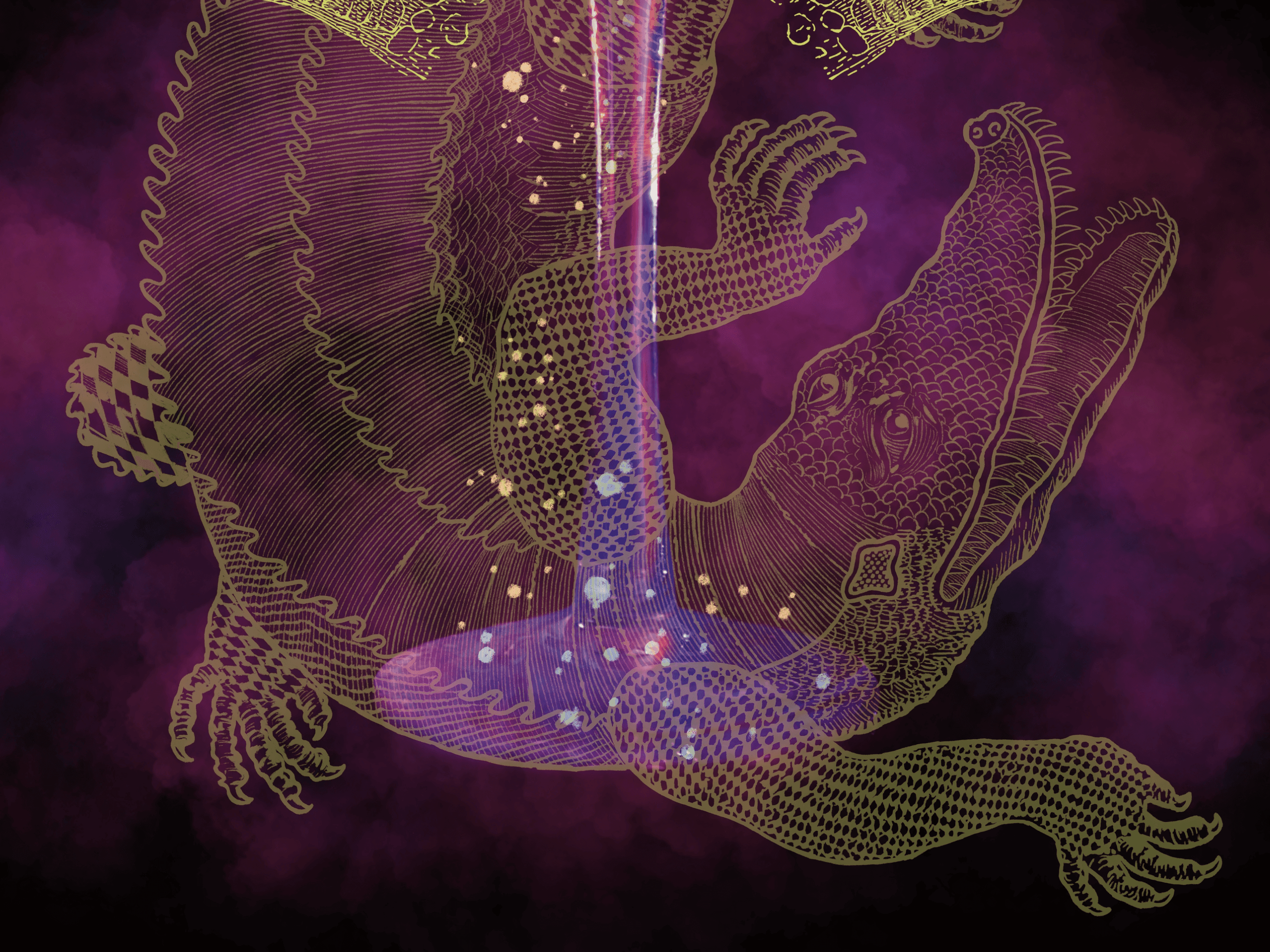
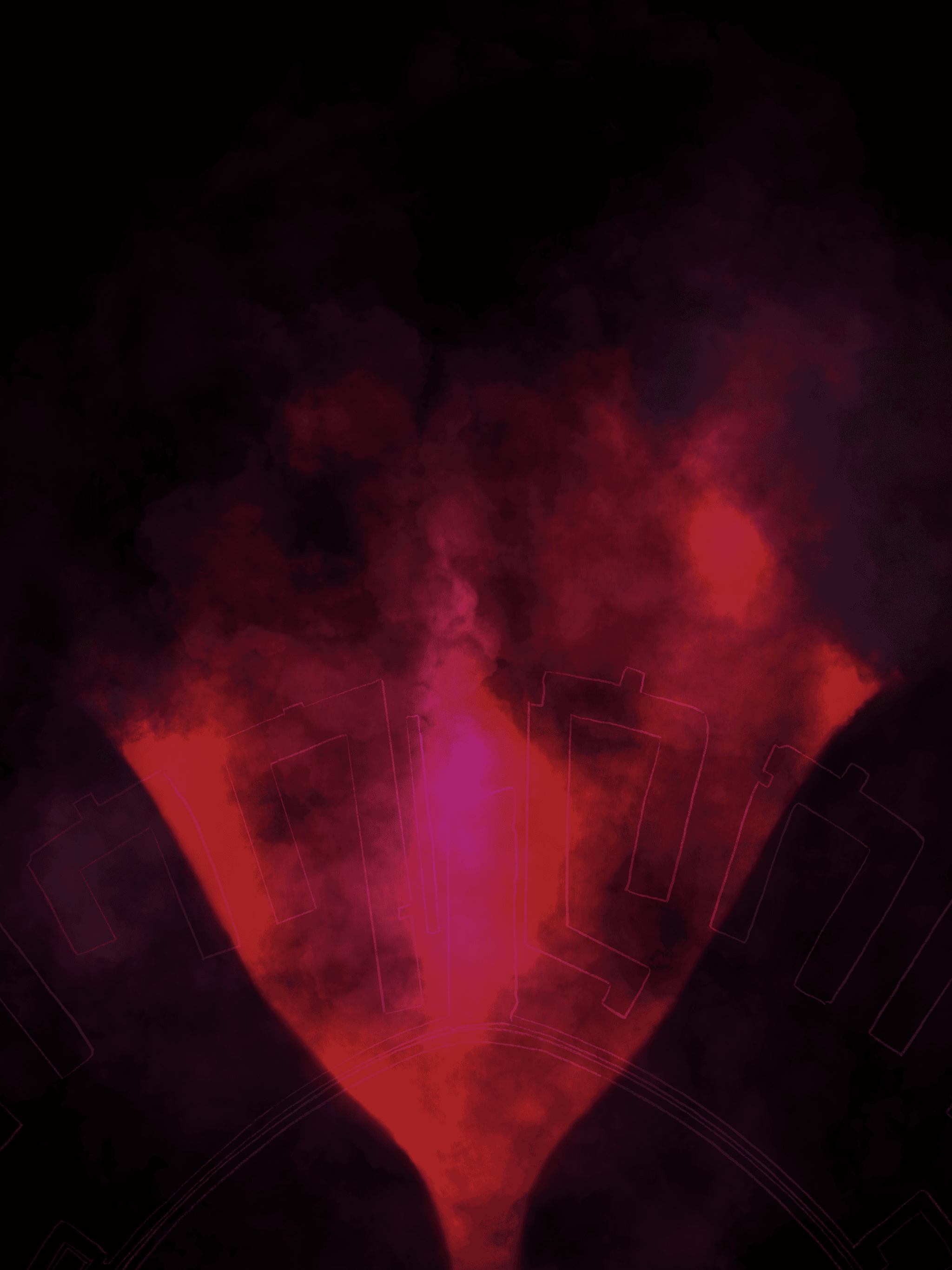
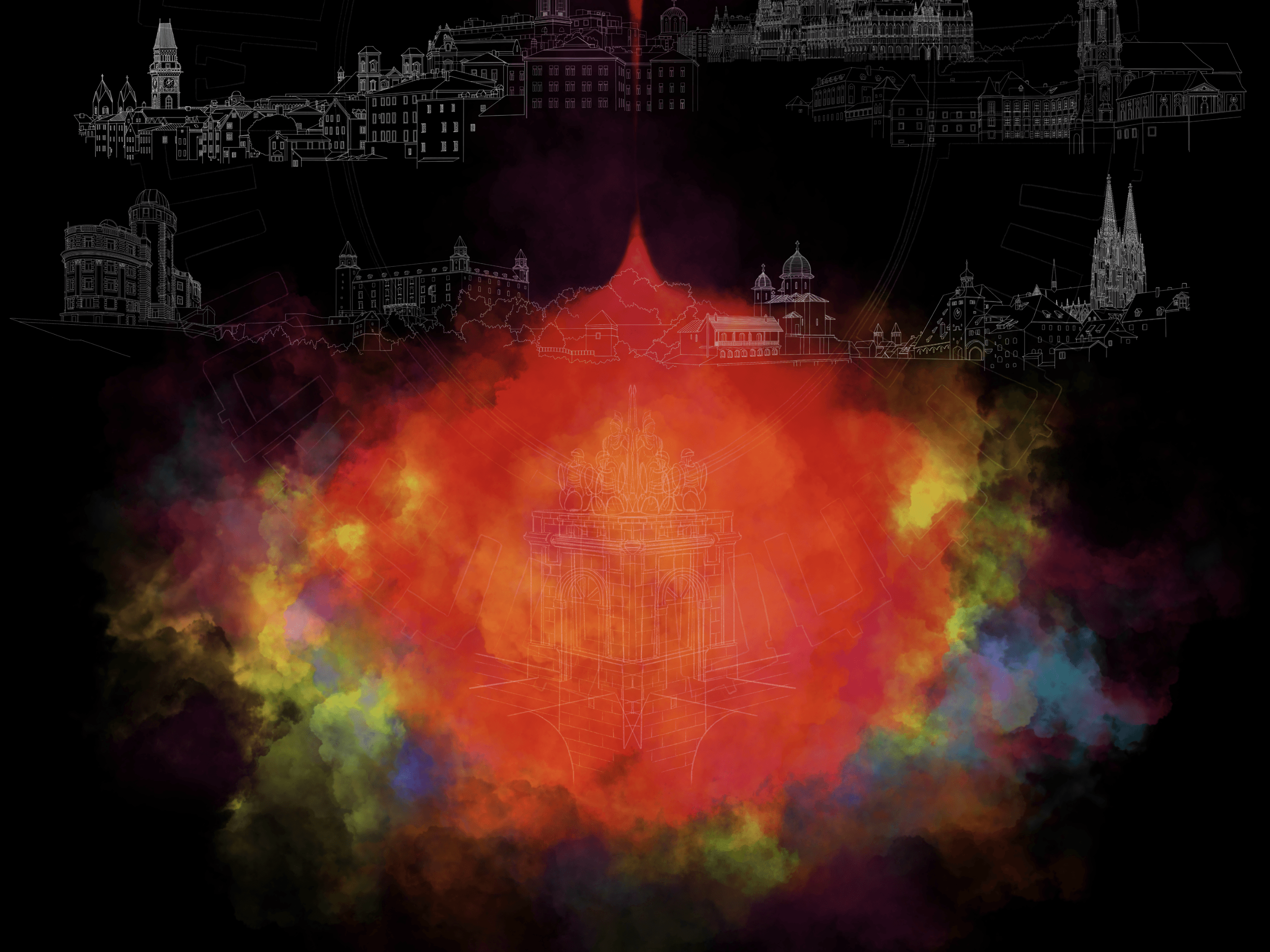
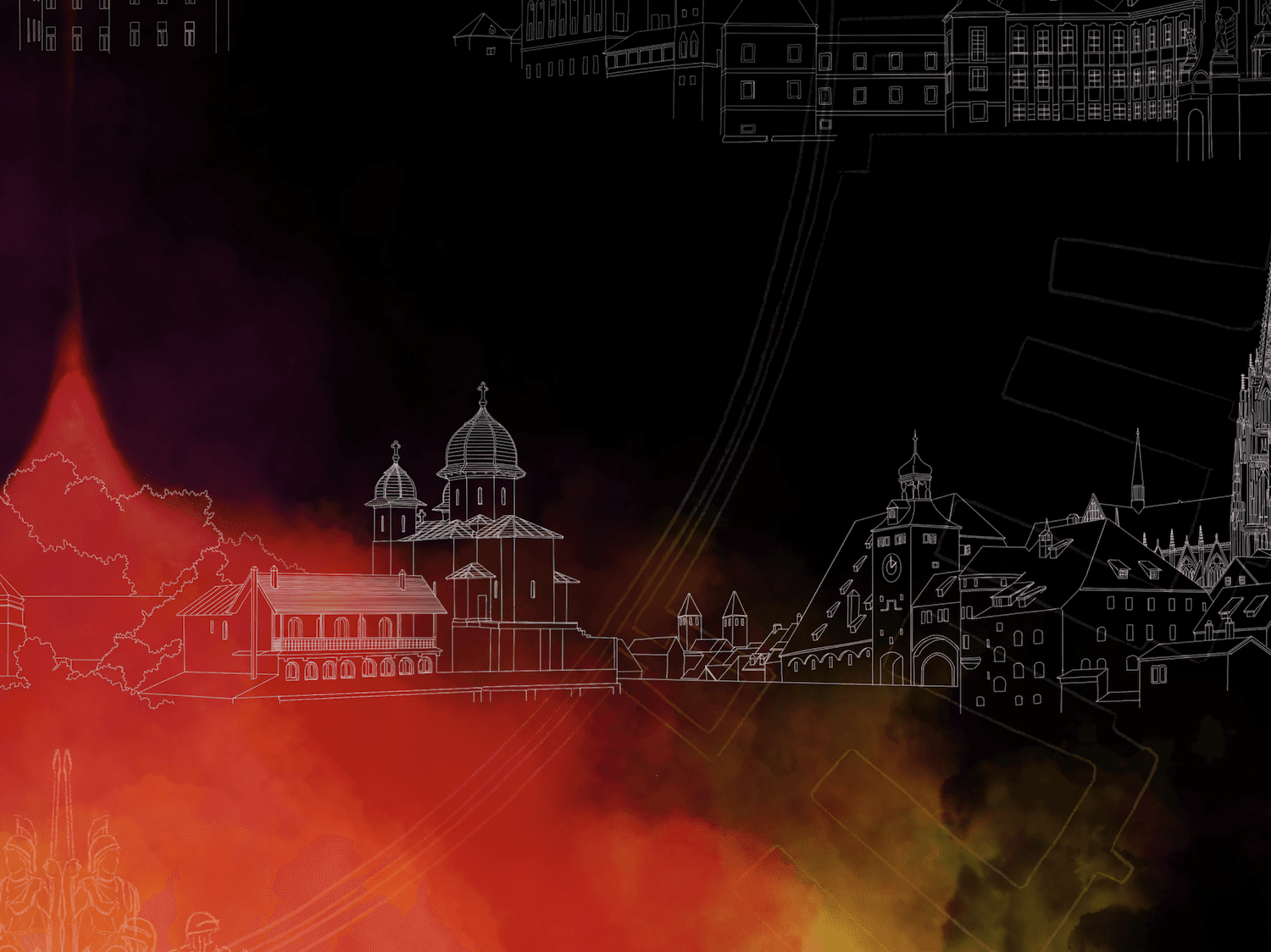
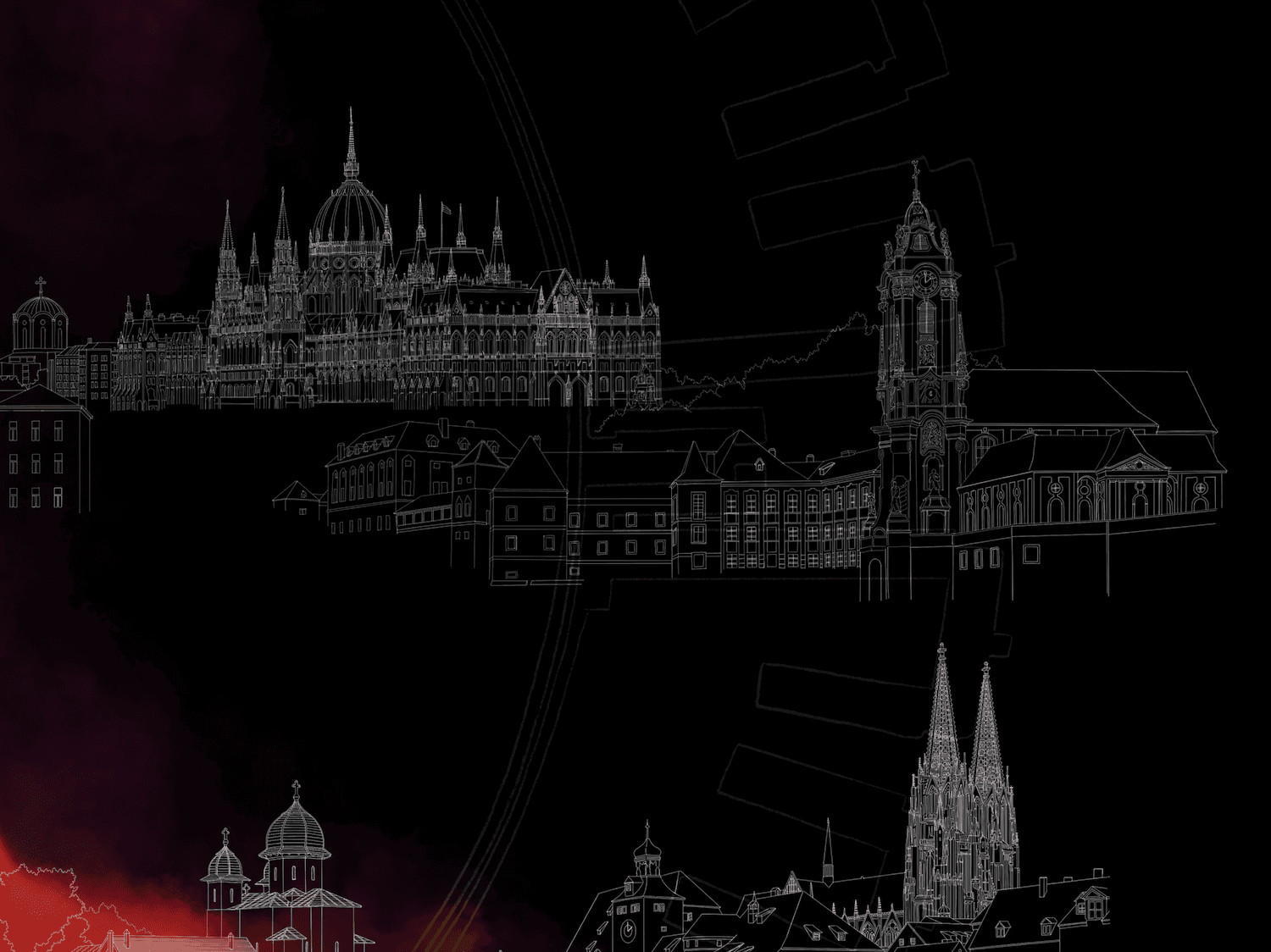
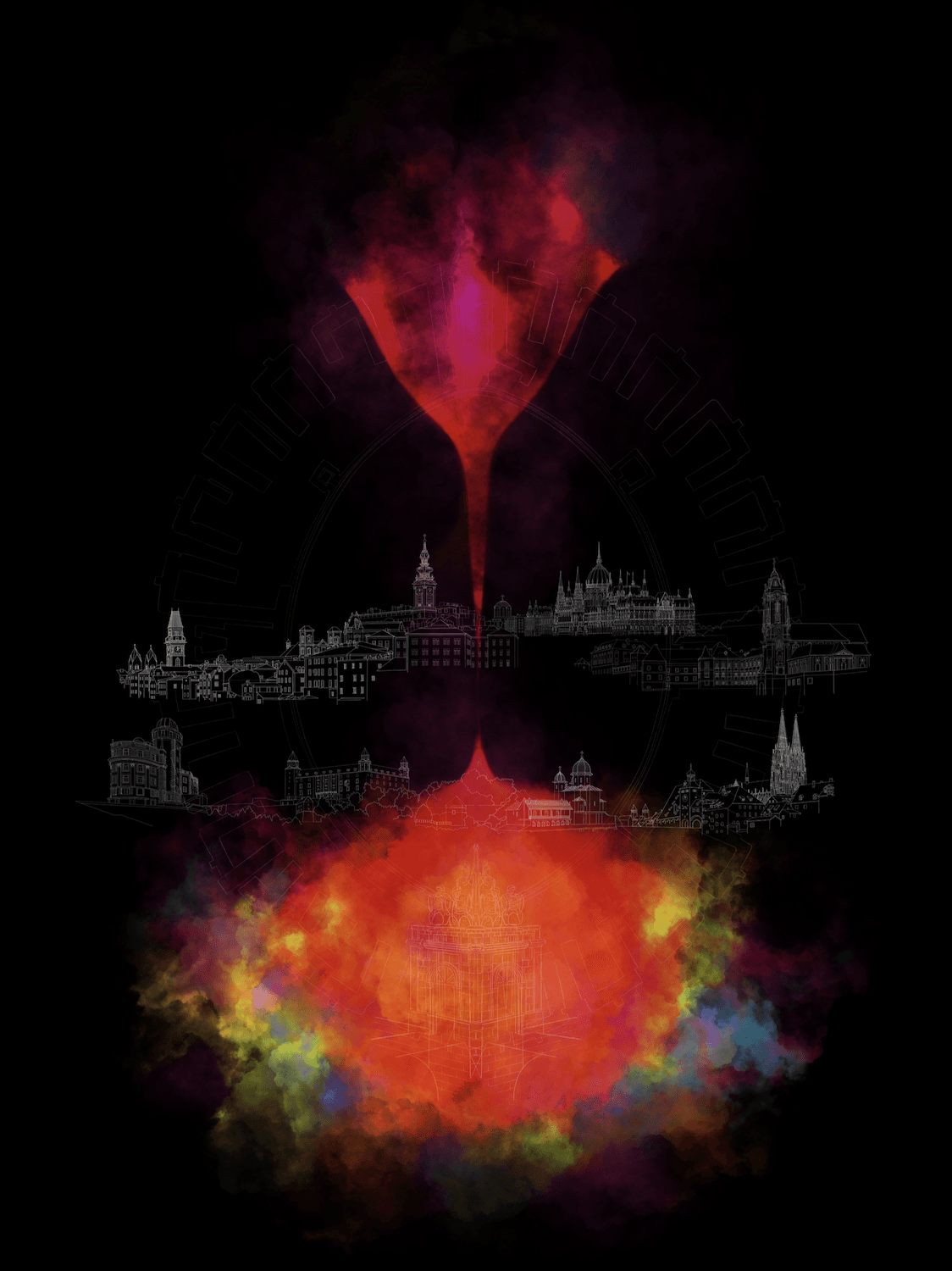
〈Danube〉 was conceived as the war in Ukraine began. Not as a response. Not as declaration. As inquiry into something structural — the conditions under which destruction and connection cross, and transform one another. The Danube passes through more nations than any other river in the world. From Germany to the Black Sea, it moves across languages, empires, borders, systems of power that rose and collapsed across centuries. The river has never belonged to any of them. Borders are fixed. Water is not. Nations divide. The current does not. And still the river moves. In 〈Danube〉, the river is not background. It is nature's own movement toward connection. At the center of the canvas, a red form crosses the black ground. It resembles an hourglass, but it measures nothing. Not sealed like glass — it tears, seeps, disperses like smoke. Closer to a gorge: a narrow passage through which something dense and pressurized moves, and becomes something else on the other side. Above that passage, cities appear that could never share a horizon in reality. The Danube begins from a single source but touches countless points as it flows. Not vertical integration, but lateral contact. A network that spreads without hierarchy, touches without absorbing, connects without controlling. The panoramic landscape in this work is physically impossible. Yet within the image, each element reaches the next through free association. Above this, a vertical axis of condensation and dispersal cuts across. Not settled unity. Unresolved tension. The red form above burns. Concentrated force: anger, devastation, the energy of collision. It passes through the narrow channel and disperses below into colors. What looked like blood scatters like blossoms. Or fireworks. Or the chemical residue of an explosion still in process. Density that has not yet found its next state. Energy that had nowhere else to go. The movement is reversible. When multiplicity becomes unsustainable, it collapses again into red. Condensation and dispersal are not cause and effect — they are a circulation, each one containing the possibility of the other. The vertical structure fixes no direction. Read downward: collapse, descent, the weight of what was lost. Something shifts. Read upward: combustion, detonation, a force that hasn’t finished moving. Is destruction a fall, or a rise? Does it oppose hope, or carry hope within it? That belongs to the viewer.
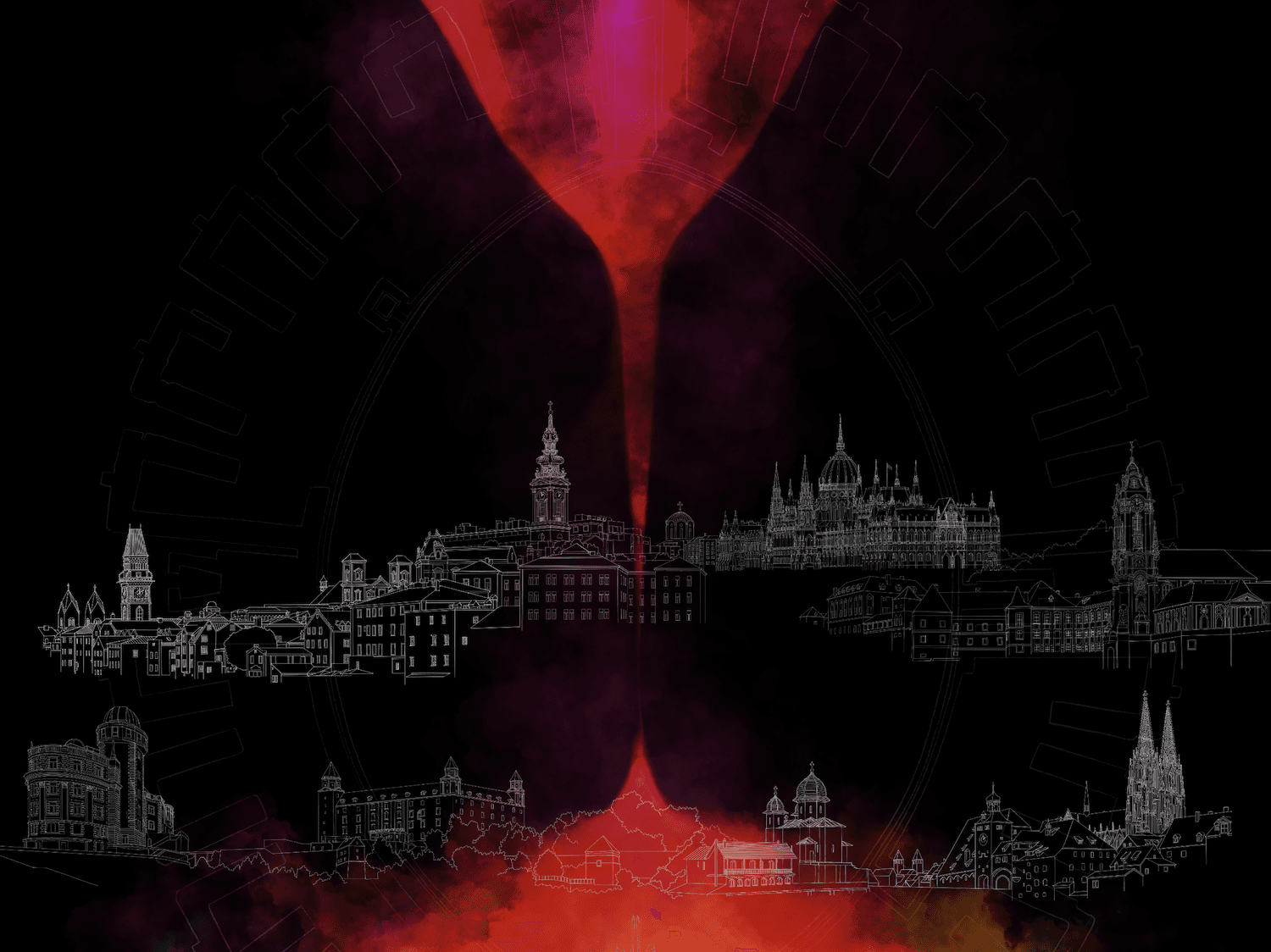
In Korean art philosophy, ink is not a fixed pigment.
It is the trace of 기운, the movement of vital energy through form. A brushstroke is not a line but the passage of that energy. Empty space is not absence but the field through which flow continues. A river is not the shape of water but energy in motion. A mountain is not a fixed object but energy in a state of condensation. The red form in 〈Danube〉 follows this logic. Not as a symbol with fixed meaning, but as a scene of 기운 condensing, passing through, and dispersing. Collapse here is not an ending. It is the moment when dense energy shifts into another state. Heraclitus said you cannot step into the same river twice. Being is not a fixed substance but a flow — yet within that flow, an order persists. The path upward and the path downward are one. Ascent and descent are not opposing movements but the same transformation read from different positions. 〈Danube〉 stands on this paradox. The faint traces of Roman ruins in the work carry this further. Rome built bridges across the Danube. Those bridges are gone. A bridge does not simply connect two banks. It allows each bank to appear as a place, gathering otherwise nameless points into relation. The bridge's disappearance does not erase that gathering. It only makes it temporary. In this work, connection does not mean full integration. It means the moment a relationship becomes visible. The moment passage between two points acquires meaning. The symbols here betray themselves. The red may signify war, or the collision of difference, or life force compressed past bearing. The dispersed colors may signify peace, or hope, or the chemical residue of a force still unresolved. When symbols begin to collapse under the weight of what they could mean, what remains is multiplicity. Meaning does not settle in one direction. It moves the way a river does, crossing itself, layering, never arriving. Being is not a fixed substance but a process of becoming otherwise. Boundaries are not real divisions. They are the appearance of stillness within continuous passage.
〈Danube〉 does not predict peace after war. It suspends the declaration.
Peace, too, can become a sign too easily consumed, imagined as a fixed state, as though flow could be made to stop. For a country that has lived in armistice for decades, peace is never an arrival. It is a moment of equilibrium, provisional, always subject to reversal. Must connection be permanent to matter? Or is it more truthful precisely because it must be endlessly renewed? Empires rose and fell along its banks. Borders moved. The current renews itself without stopping. The river never fully belonged to any of them. 〈Danube〉 holds that unresolved tension: a state that is unfinished yet does not disappear, unfixed yet undeniably present. The red form does not resolve. It is confluence and passage, condensation and becoming. Transformation that has not yet found its name.